Why Employees Follow Brands That Create a Sense of Belonging
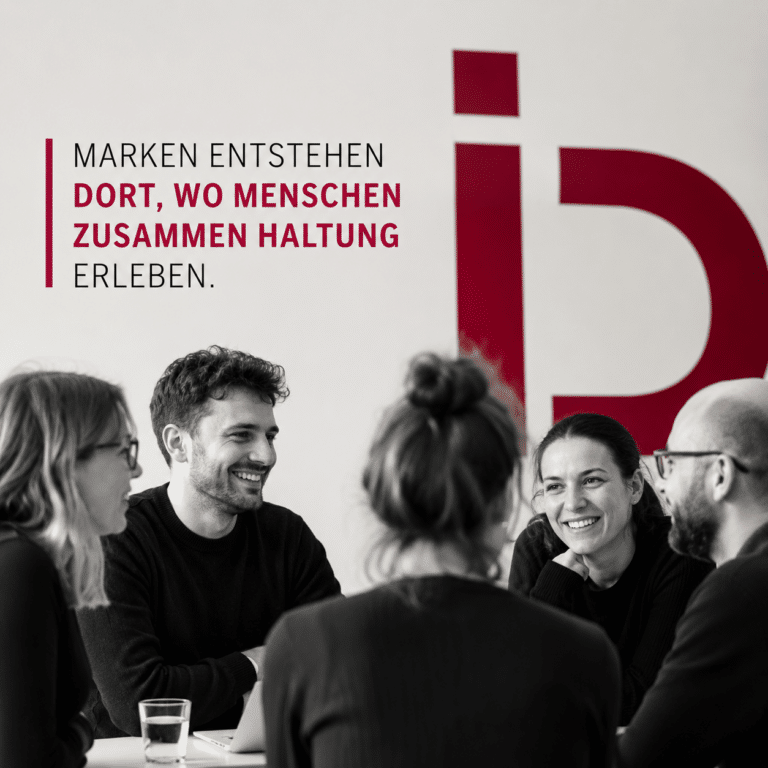
Recently, during a coffee break at an event in Berlin, an HR manager told me about her company’s latest employee survey. They had done everything right, she said. The company had been restructured, an agency had developed a modern visual identity, a new tagline and a major internal presentation. ‘And yet,’ she said, ‘the sense of togetherness in the company has actually got worse.’
That remark stayed with me because it describes something we have been observing more and more frequently in recent years.
Many companies now invest heavily in employer branding, recruitment campaigns and internal communication. Careers websites are redesigned, social media channels are kept busy, managers receive training, and new values posters appear on walls everywhere. Yet genuine emotional attachment often fails to develop.
Why?
Because employees quickly recognise whether a brand is merely being communicated or genuinely lived.
People do not follow a brand they cannot feel
We see this time and again, particularly in medium-sized businesses, hospitals and social organisations. People in these organisations often carry considerable responsibility and show enormous personal commitment. They spend a large part of their lives at work. That is precisely why they look for direction, credibility and an environment that feels genuine.
A new logo alone does not create a sense of ‘we’.
Nor does a beautifully printed mission statement change a culture.
What brings people together is something else
It is the small things in everyday life:
- How people speak to one another.
- How managers listen.
- How decisions are made.
- How teams deal with mistakes.
- Whether colleagues support one another.
- And whether values still apply when things get difficult.
This is where a brand’s credibility is decided.
A few months ago, the marketing director of an automotive supplier told us quite openly that their mission statement was sitting in a filing cabinet somewhere and had never really been put into practice.
The reason was fairly simple: the mission statement had been written from the top down, but never developed together with employees. People could not see themselves in it.
Our experience over many years has shown that people do not become enthusiastic simply because they are presented with a finished set of values. Enthusiasm develops when they have the opportunity to participate. And genuine participation takes time. Even in the age of AI, the development of identity cannot be accelerated at will.
Of course, texts can now be written more quickly, presentations automated and campaigns produced more efficiently. But trust cannot be created at the touch of a button. Neither can a sense of community. Genuine participation is always about relationships. People need to experience that their perspectives are heard, that their experience counts and that they are part of something being created together.
That is why the best identity processes rarely work from the top down
They work when people are able to help shape them, when teams explore questions together:
- Who are we, really?
- What makes us distinctive?
- How do we want to work together?
- And what do we want to be proud of?
This is becoming increasingly important in hospitals. The challenge is no longer just about processes, digitalisation or efficiency. Often the real question is: how do we create an environment where people want to stay? Skilled professionals do not choose an employer on salary alone. They also choose its attitude, culture and trustworthiness.
Studies have long shown that organisations with a strong corporate culture perform better, both economically and in human terms. Hospitals with a positive culture find it easier to attract new employees and often achieve higher patient satisfaction too. That is hardly surprising. People want to belong to something that gives them direction. And this is exactly why identity is becoming so important. At a time when communication is getting faster, louder and more interchangeable, people are looking for something genuine: organisations that do more than talk about values, and make them visible in everyday life.
A genuine sense of belonging develops through shared experiences, values that provide direction, behaviours that build trust and leaders who set an example. Then an organisation becomes more than just a workplace. A shared identity emerges.
And that is where a strong brand begins.